Friday, October 23, 2026 | St. Lawrence County, NY
CANTON – Following more than an hour of public speakers opposing potential data centers being sited in the North Country, St. Lawrence County legislators passed a resolution that will give the …
This item is available in full to subscribers.
To continue reading, you will need to either log in to your subscriber account, or purchase a new subscription.
If you are a digital subscriber with an active, online-only subscription then you already have an account here. Just reset your password if you've not yet logged in to your account on this new site.
Otherwise, click here to view your options for subscribing.
Please log in to continue |
 BY JEFF CHUDZINSKINorth Country This Week
CANTON – Following more than an hour of public speakers opposing potential data centers being sited in the North Country, St. Lawrence County legislators passed a resolution that will give the county and municipalities local authority over siting.
The measure passed overwhelmingly during the June 1 full board meeting, 12-3. Legislators William Sheridan, Joseph Lightfoot and Jim Reagen opposed the measure.
Municipal moratoriums?
Though many residents have called for a county-wide moratorium on the matter, Legislator Rita Curran clarified the county cannot legally assert that authority.
Curran suggested county officials meet with municipalities to address the options on the table, including local moratoriums if leaders felt it necessary.
She said as current local laws and codes are, municipalities have virtually no recourse.
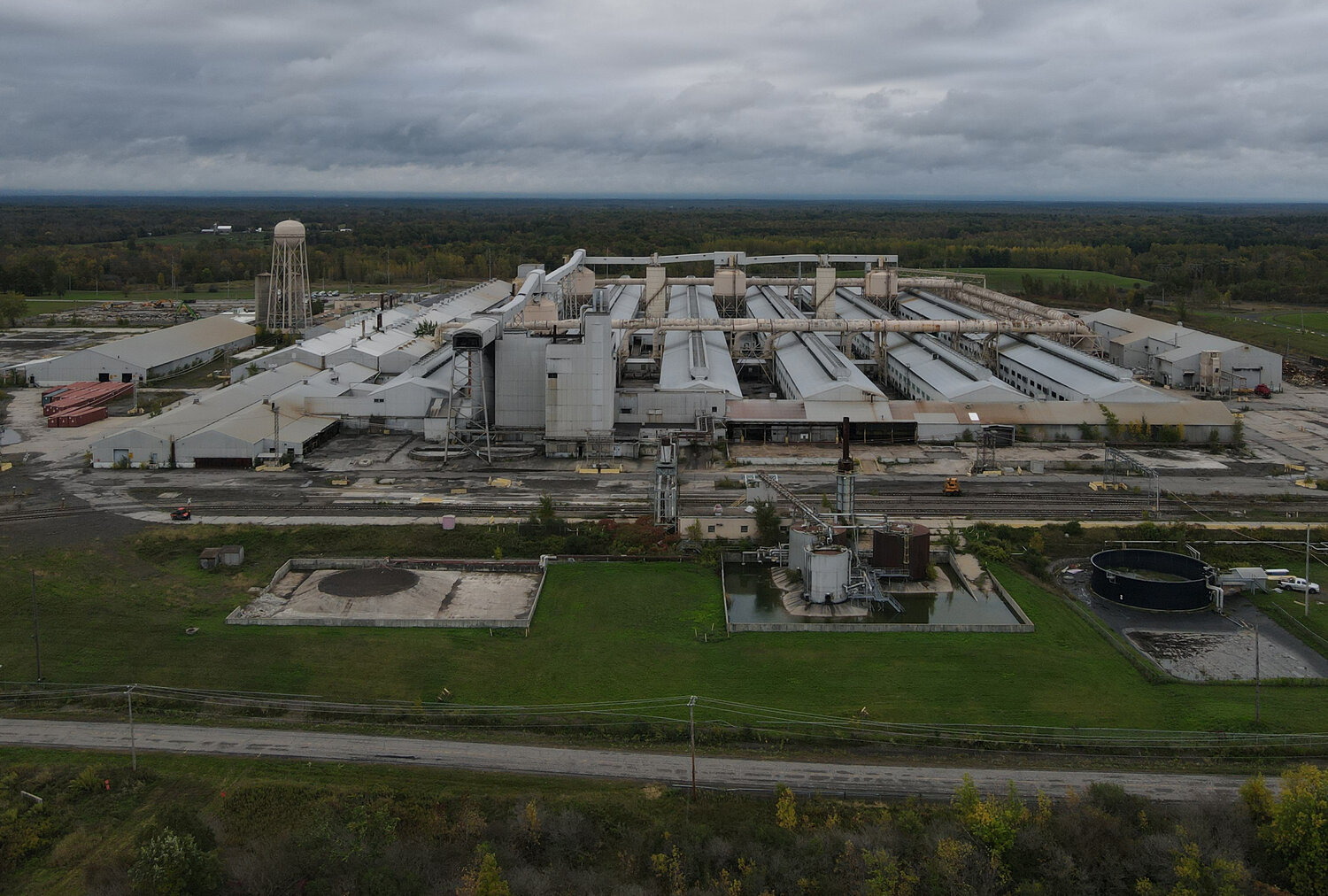
Curran said when she first learned of the planned expansion by North Country Collocation Services at the former Alcoa East plant in Massena, only one data center was on the list with the New York Independent System Operator, which manages the electrical grid in New York. She said ther
“This is one of those subjects no one said much about and all of a sudden there’s 50 groups,” Curran said.
Legislator Margaret Haggard said Curran “took the words out of her mouth,” as she too supported the resolution and Curran’s amendment that would require the county to send certified copies to the St. Regis Mohawk Tribe and greater Akwesasne population to inform them of the county’s intentions.
Legislator John Burke, who supported the resolution, also suggested the board work closely with the county Planning Office to learn more about their options.
Planning Director Jason Pfotenhauer addressed the board on multiple matters, including the options municipalities like Massena have.
“So there are a couple of options that I think can play out throughout the community here that would be most impacted by data centers,” he said.
Pfotenhauer said Massena is a prime location due to the proximity to power lines and power supply.
When NCCS came through the county Planning Board, Pfotenhauer said the county approved the project with stipulations, including a suggestion that the Massena Town Board and Planning Board adopt language that specifically regulates data centers.
Massena previously had a multi-year moratorium on data centers using shipping containers in place of permanent structures, a moratorium NCCS officials said could have ended the expansion project before it ever began.
Late last year that moratorium was lifted after the town adopted regulations specifically related to the structures and some zoning restrictions, however those regulations likely lack the depth necessary to regulate a multi-million dollar expansion project as proposed by NCCS.
Pfotenhauer said any regulations adopted by the county or Massena could be emulated by other communities to streamline the process.
He reiterated the power to establish a moratorium rests solely with the towns and villages, not with the county.
“There is certainly some opportunity for municipalities to take action and regulate data centers,” he said.
Burke questioned what role, if any, the county Industrial Development Agency might play in the process, in particular as it relates to Payment in Lieu of Taxes programs.
The county IDA has given extensive PILOTs for many solar projects throughout the county, with many receiving 30-year PILOTs, a move that has been heavily criticized in recent years.
Legislator Jim Reagen touched on the subject, saying he was unsure if the legislature had ever weighed-in on PILOTs for solar arrays, saying the state had largely stripped counties and local municipalities of any decision making authority.
When it comes to a PILOT for a data center, however, the town or village, along with the school district and county must all agree to the program.
“It’s not as if the IDA can willy nilly issue PILOT agreements without the town, locality, school district and county considering what is being considered,” Reagen said.
County concerns
Taking matters a step further, Legislator Anthony Levato sought an amendment to the resolution that would urge municipalities to take up moratoriums.
That measure was successful as well.
Legislator Larry Denesha likened the rise of artificial intelligence to the rise of Skynet in the Terminator films.
He said AI has already led to the loss of jobs, saying one did not need to look any further than McDonalds to see the initial impact.
Denesha said the county, towns and villages could no longer rely on the state and Department of Environmental Conservation to “look out for their best interests” any longer as the DEC has seemingly turned a blind eye to environmental impacts from solar arrays, wind turbines and data centers alike.
It’s a sentiment shared by Legislator Glenn Webster, who said the DEC needed to step up.
He said with potentially bills of dollars on the line he felt he could no longer trust the DEC to do the right thing.
“We need to do what is right for us, right for our communities and right for our children,” he said.
Burke also said it was also a matter of power usage, as National Grid officials previously presented to legislators to detail the rising costs of electricity.
During the presentation, those officials spoke to rising demand with stagnant supply.
Couple that with electricity that would cost more because it was created using natural gas and you have a recipe for much higher rates, officials said.
Legislators Joseph Lightfoot and Nicole Terminelli also spoke on the matter, calling for a “deeper dive” into the data and potential impacts such facilities could have, with Terminelli also calling for moratoriums on development until more research could be conducted.
“There is nothing in place to even allow towns and villages to exercise any kind of decision making. A moratorium is the only way to slow this and at least pause development,” she said.
More information needed
Lightfoot said he felt there was “no need for the county to do this on their own,” suggesting county leaders should work directly with towns and villages to get their opinion on the proposal first.
He also suggested the county Planning Office be directly involved as well as code be reviewed.
Lightfoot questioned where the power would come from for such projects and what plans there may be to bring additional power to the North Country to ensure residents are not impacted in any way.
“I think there are a lot of questions that need to be asked. I certainly don’t have them all but that’s a couple,” he said.