Thursday, October 8, 2026 | St. Lawrence County, NY
MASSENA -- The Massena Town Board is considering a code change to clarify language that would allow data centers to operate in industrial zones but members of the Saint Regis Mohawk Tribe vehemently …
This item is available in full to subscribers.
To continue reading, you will need to either log in to your subscriber account, or purchase a new subscription.
If you are a digital subscriber with an active, online-only subscription then you already have an account here. Just reset your password if you've not yet logged in to your account on this new site.
Otherwise, click here to view your options for subscribing.
Please log in to continue |
 BY JEFF CHUDZINSKINorth Country This Week
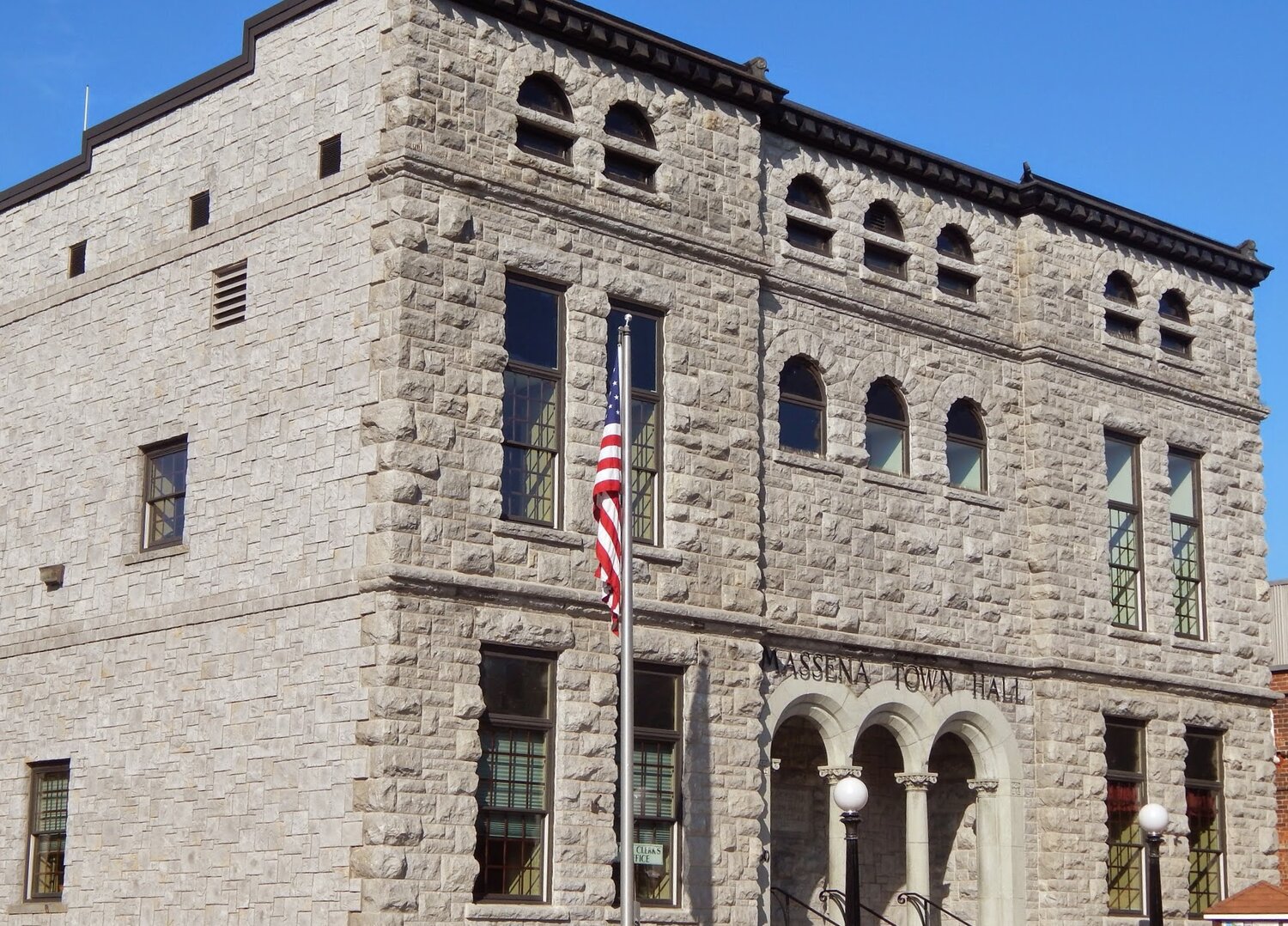
MASSENA -- The Massena Town Board is considering a code change to clarify language that would allow data centers to operate in industrial zones but members of the Saint Regis Mohawk Tribe vehemently opposed the measure during a recent public hearing.
To drive his point home, Tribal member Larry Thompson threw a bundle of cash on the board room table, saying “that’s all anyone cares about,” during the Jan. 21 public hearing.
“We need to look past money. We need to consider our future, our children’s futures,” Thompson said.
The hearing was scheduled following comments from the St. Lawrence County Planning Board, which recommended the town clarify language in existing code to ensure data centers were legally allowed to operate in such zones.
Though they said it “appears” data centers would be allowed to operate in industrial zones, county officials said it would be in the town’s best interests to update the language.
Town officials said the proposed change is not merely a technicality but an opportunity for residents to voice their concerns.
More than two dozen community members spoke against the possibility of further data centers coming to Massena, with many tribal members saying they did not want any such operations near the territory.
Among the locations zoned industrial is the former GM powertrain location, which borders the reservation.
One resident also touched on the economic rationale behind such operations coming to Massena, saying they prey on impoverished communities with lower income rates in hopes of looser regulations and less red tape to establish themselves.
“This is a detriment to our community. It’s a detriment to the health of everybody that’s here. Right now you’re asking for a major polluter to come in,” he said.
Many cited environmental hazards as their primary concerns, with one resident talking about water intake for cooling efforts.
“There’s a lot of concerns, one primarily being the water intake that data centers need to cool. Where does that water go because we already have tremendous environmental impacts downstream in Akwesasne. So, as it is right now, we see the data center as a threat to our health,” she said.
Others pointed to a long history of polychlorinated biphenyls (PCBs) from industrial operations such as Alcoa and General Motors being dumped in navigable waters that have led to significantly higher cancer rates among Akwesasne community members.
“That whole stretch, where all of those houses are before our lands, is known for higher cancer rates,” one resident said.
Another resident pointed to alleged CO2 emission rates and their impact on global warming as more reason for concern.
“When you talk about the rivers, we’re just being able to eat fish out of the St. Lawrence River again. Data centers are well-known for CO2 emissions, which cause global warming, which causes problems with the climate in the air, but also cause problems with the water,” he said.
Some questioned who would be liable if issues arose with a data center that may lead to serious health hazards and environmental contamination.
“I’m just looking at the liability and who’s responsible for any detrimental impact to the health of the community in Akwesasne,” one speaker said.
Another resident questioned efforts to dredge the Grasse River, which removed 220,000 cubic yards of PCB-contaminated sediment and led to 260 acres of capping to restore the waterway.
“We already have the remnants and leftovers of the plants that existed here to the cancer rates in this area to what’s still happening today. So, my concern has a lot to do with health. They just dredged this river and that opened up the airways again for all these contaminants, PCBs, to float in the air, to bring it down downstream again,” she said.
The project, which was completed in 2022, was listed as a Superfund Site by the EPA following a lengthy review process.
Power usage was another point of contention, as many in attendance said the excess power used by such operations would drive up electric rates.
But Town Attorney Eric Gustafson clarified the process for data centers to purchase power, saying it is separate and distinct from residential power.
Gustafson said such operations purchase power directly from NYISO, with agreements in place for specific allocations for power to ensure residential users are not impacted.
Some residents refuted the claim, pointing to significantly higher energy rates in recent years as more projects have come online in New York.
State lawmakers have called for an audit of delivery fees residential users are paying, with recent comments suggesting numerous disparities statewide.
Jim Ralston, an electrical engineer by trade, said he previously worked at North Country Data Center for about a year, an experience that formed his opinion that data centers are “an incredible waste of energy.”
“When I was there that first year, we were using 30 million watts in that data center, and that’s enough energy to operate all the homes in Massena. That was one pot line. They had the capacity for six pot lines,” he said.
He pointed to the rising expense per megawatt-hour to produce the necessary energy to support data centers as a main point of contention.
““As more places come online to produce that power, they’re more costly per megawatt-hour to produce that energy, which is why we’re seeing jumps in our energy bill, especially during the winter. It costs more money to make that power. Somebody’s paying for it and I’m not convinced it’s only the data mining companies,” he said.
While some called for an outright ban or new moratorium to work out regulations and to time to consult with the Saint Regis Mohawk Tribe, others suggested alternatives to the regulations to make it more stringent upon such operations.
One resident suggested requirements for additional testing, environmental impact studies and bans on external cooling or water discharge.
“If we say ‘hey you can only use a contained cooling system,’ that would mitigate that specific impact on the environment, for instance,” he said.
But many tribal members continued to voice their frustrations that the town had previously not consulted with the tribe prior to allowing data centers to set up shop in the town.
In attendance was Grand Chief Leonard Lazore from the Mohawk Council of Akwesasne.
He addressed the board, along with some of his district chiefs, saying he “came to listen” but to also request a face-to-face meeting with town officials.
“We, too, are focused on economic development. We, too, know it’s important to step carefully, and we also know it’s really important to have that communication. Without that communication, it’s just going to cause fear. It’s just going to cause conflict. It’s going to cause so many issues that I don’t think either of us want,” he said.
Deputy Supervisor Sam Carbone, who presided over the meeting in the absence of Supervisor Ray Lancto, said it was his hope to establish “strong relations” with the tribe and to have open dialogue that would benefit the entire community, not just the town of Massena.
Lazore said he felt many of the issues could be resolved if the two sides worked together but noted that his community was “scared” of many propositions for the town of Massena.
My people are saying, ‘Is it time to stay out of Massena?’ Our businesses are scared. Is it time to stay out of Massena? Our corporation is scared. Is it time to stay out of Massena? And, I said, ‘Well, wait, let’s talk first. Let’s go there and find out. Let’s have a meeting, and let’s set this up, and let’s share that information,;” Lazore said.
Carbone said it was his hope to use all of the information presented, in conjunction with ongoing meetings with stakeholders, to come to a solution that would work for everyone involved.
He said the town board did not anticipate taking immediate action on proposed code changes, saying the town board took the matter very seriously and would not rush a decision.
We’re glad you read this article reported by the staff of NorthCountryNow.com.
If you haven’t done so already, please consider subscribing to ensure you have full access to all the news and info about St. Lawrence County.
Your subscriptions make it possible for us to provide trustworthy local news, promote our many community events, and encourage community dialogue.