Sunday, October 18, 2026 | St. Lawrence County, NY
State lawmakers have passed a one year moratorium on data centers, a move that was spurred by a nationwide outcry against the tech facilities.
Legislators went late into the evening hours …
This item is available in full to subscribers.
To continue reading, you will need to either log in to your subscriber account, or purchase a new subscription.
If you are a digital subscriber with an active, online-only subscription then you already have an account here. Just reset your password if you've not yet logged in to your account on this new site.
Otherwise, click here to view your options for subscribing.
Please log in to continue |
 BY JEFF CHUDZINSKINorth Country This Week
State lawmakers have passed a one year moratorium on data centers, a move that was spurred by a nationwide outcry against the tech facilities.
Legislators went late into the evening hours June 4, to hammer out the details.
Permits have been paused for the facilities and new rules on utilities, energy efficiency goals, community benefits and labor standards were put in place.
The bill is expected to be signed into law by Governor Kathy Hochul by the weekend.
The call to ban data centers outright has gained momentum in some parts of the country, including many municipalities that have enacted bans in recent weeks, however New York lawmakers said the pause is necessary to consider "reasonable regulations" that will protect water and energy sources.
State lawmakers had mulled the possibility of a moratorium during the extended budget session, however no legislation was included in the budget bill.
According to a statement from the New York Independent System Operator (NYISO), 24 data center proposals are currently under consideration.
Ten of those projects would potentially land in St. Lawrence County.
NYISO oversees the electric grid in New York and is responsible for the wholesale distribution and purchasing of power
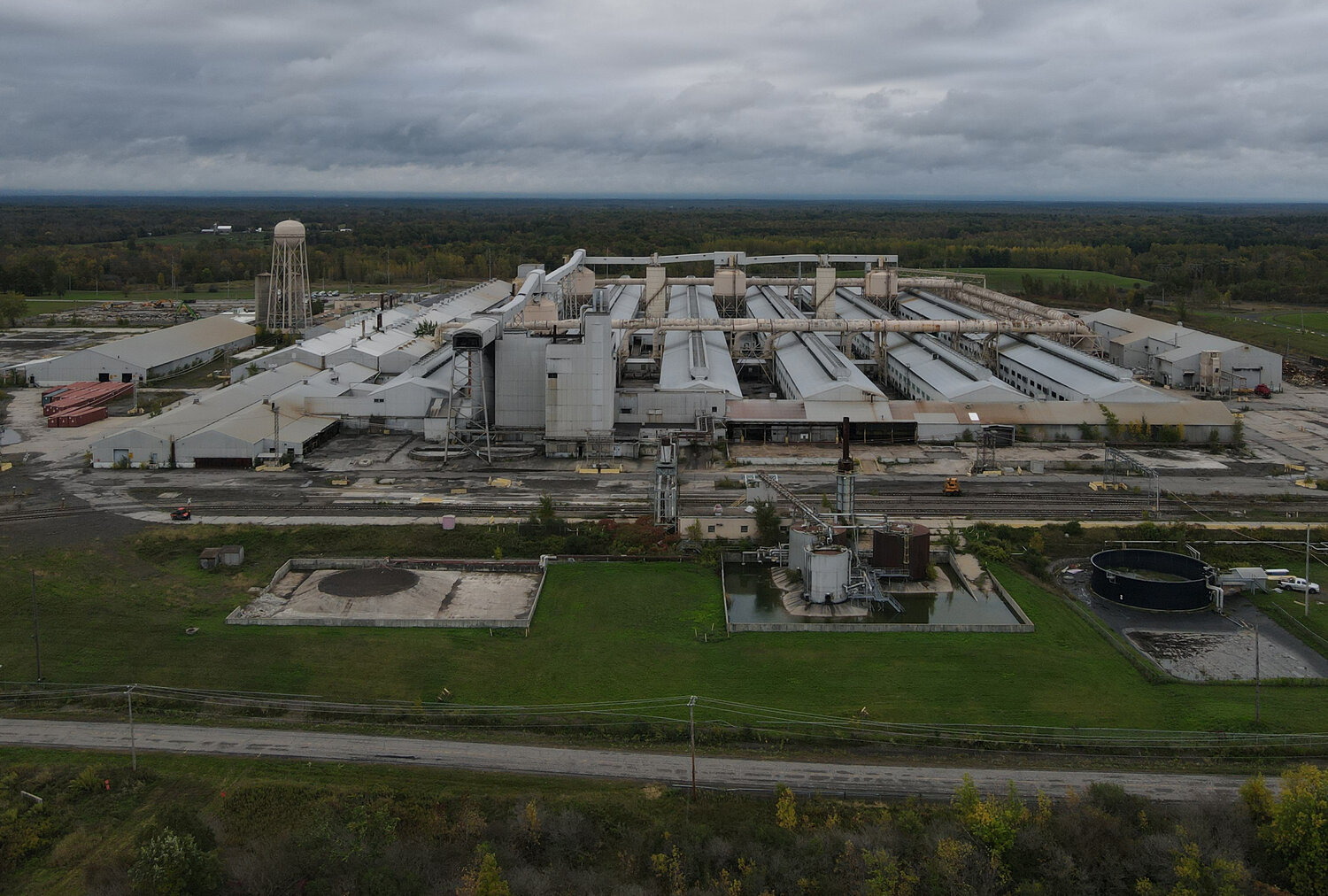
NYDIG is currently proposing an expansion of their existing operation at the former Alcoa East plant in Massena.
That project too has received sharp criticism during a May 21 Town of Massena Planning Board meeting as more than 80 residents packed room 30 of town hall.
As part of the plans, NYDIG would oversee the creation of three facilities, ranging from 450,000 to 515,000 square feet.
In total, the buildings would total around 1.5 million square feet, NYDIG official Josh Burandt said.
Attorney Lindsey Haubenreich, who is working with NCCS on the project, clarified the three buildings would be on subdivisions for liability sake.
In total, NYDIG would retain around 800 acres at the former 1,600 location. Alcoa would retain a large portion of the site as it has been designated a Superfund site and requires constant monitoring and remediation, Haubenreich said.
In total, plans call for the use of 635 megawatts of power.
Despite Planning Board Chair Vance Fleury telling attendees multiple times the meeting was for informational purposes only and that no action would be taken by the board, more than a dozen attendees interrupted NCCS employees with questions.
When told by Fleury and other board members of the planning process, many questioned why they could not ask questions during the presentation.
"We have questions now. Why can't we ask them?" one resident was heard saying.
The crowd was largely hostile toward the project, with no attendees speaking in support of the project.
Others questioned the scope and feasibility of such a project.
Around a week later, St. Lawrence County legislators passed a resolution that would give the county and municipalities local authority over siting of such projects.
The measure passed overwhelmingly during the June 1 full board meeting, 12-3. Legislators William Sheridan, Joseph Lightfoot and Jim Reagen opposed the measure.
Though more than a dozen public speakers called for a county wide moratorium, legislators said that would likely be illegal and left the possibility of such measures to individual municipalities to decide.
Legislator Rita Curran clarified the county cannot legally assert that authority.
Planning Director Jason Pfotenhauer addressed the board on multiple matters, including the options municipalities like Massena have.
“So there are a couple of options that I think can play out throughout the community here that would be most impacted by data centers,” he said.
Pfotenhauer said Massena is a prime location due to the proximity to power lines and power supply.
When NCCS came through the county Planning Board, Pfotenhauer said the county approved the project with stipulations, including a suggestion that the Massena Town Board and Planning Board adopt language that specifically regulates data centers.
Massena previously had a multi-year moratorium on data centers using shipping containers in place of permanent structures, a moratorium NCCS officials said could have ended the expansion project before it ever began.
Late last year that moratorium was lifted after the town adopted regulations specifically related to the structures and some zoning restrictions, however those regulations likely lack the depth necessary to regulate a multi-million dollar expansion project as proposed by NCCS.
Pfotenhauer said any regulations adopted by the county or Massena could be emulated by other communities to streamline the process.
He reiterated the power to establish a moratorium rests solely with the towns and villages, not with the county.
“There is certainly some opportunity for municipalities to take action and regulate data centers,” he said.